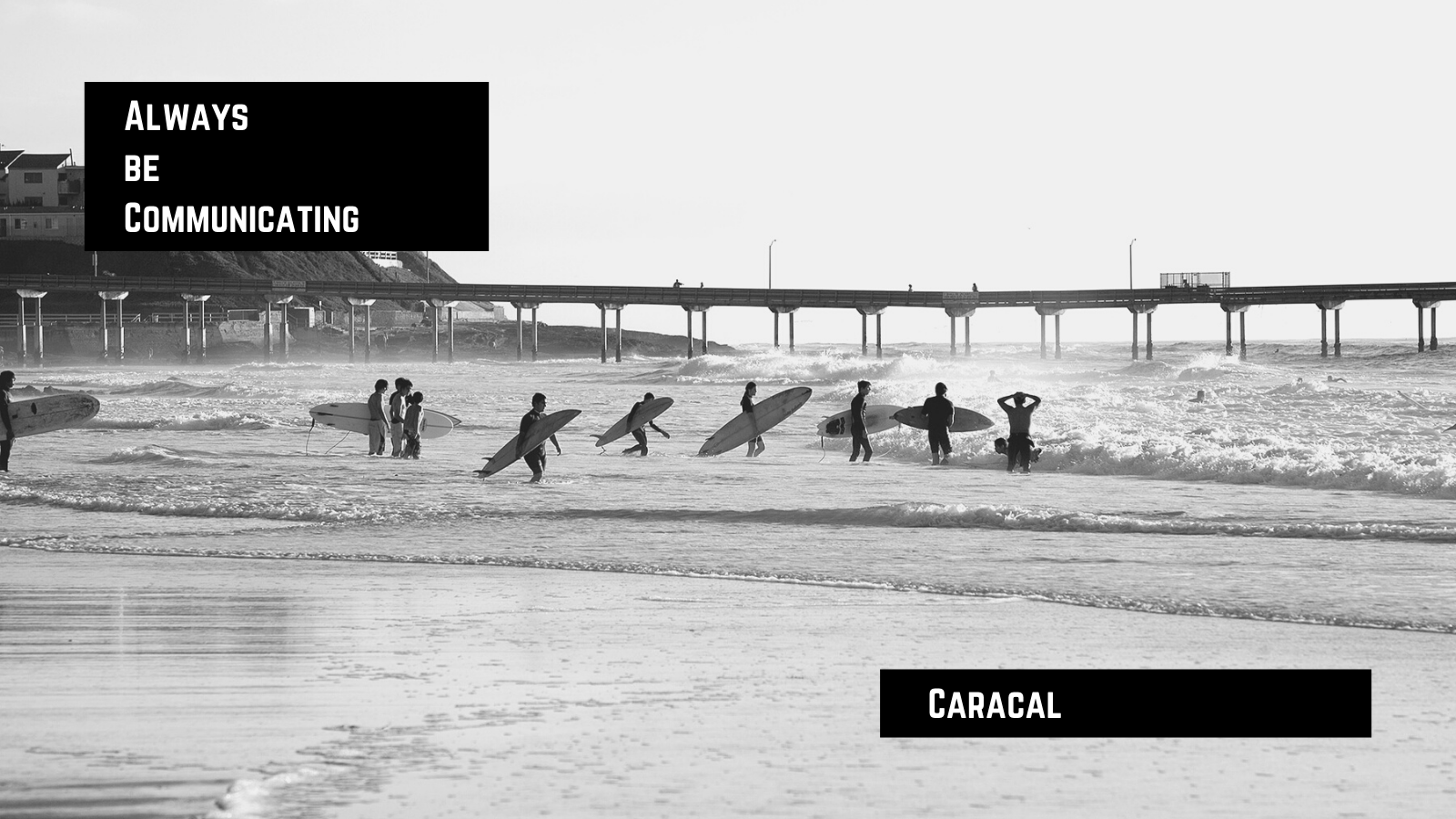
America's most notorious surf gang and communications

It's not every day that Newsweek covers surfing.

In this case, the coverage was less than desirable.

In 2016, Newsweek called the Lunada Bay Boys "America's most notorious surf gang."

The group's territorialism of the Lunada Bay public beach caused controversy in the legal and surfing worlds.

Even though the United States enjoys a shoreline of 95,471 miles, good surf spots are rare.

Rare surf spots with solid waves, even rarer.

If this break is near a large population center with many surfers, territorialism often arises.

Regular surfers who live around a desirable surf break may often guard it jealously, hence the expression "locals only."

As Newsweek reported: "Lunada Bay is a near-perfect half-circle in the Pacific coastline of Palos Verdes Estates, an upper-middle-class enclave of Los Angeles. The land drops steeply to the water, the cliffs immediately evocative of California at its most gorgeous and dramatic. The waves at Lunada Bay can reach 15 to 20 feet, making it one of the premier surfing spots on the entire West Coast."

The question of who gets to surf Lunada Bay highlights the hostility to outsiders known as localism.

For nearly the past half-century, a group of local surfers known as the Bay Boys has jealously protected access to the waves of Lunada Bay with verbal abuse, threats, and vandalism, sometimes resorting to violence.

Per the New York Times: "Surfing "localism," with a hierarchy in the water-based on skill and seniority, is hardly exclusive to this beach: It can be found at choice breaks from here to Australia. And many surfers see its benefits, especially in spots with big waves that are dangerous for beginners."

Violence is not great, especially for a decidedly chill pursuit like surfing.

However, a "locals only" mindset is a must for communications.

When I start working with a client, they want to secure media coverage in all the top national and metropolitan news outlets and often forget about the benefits of local news.

"You want to be covered by the Wall Street Journal. Oh really. So does everyone else, including the President of the United States."

This overemphasis on high media misses low media opportunities.

For many businesses, most of their customers are better reached locally.

This means securing media coverage in local newspapers, magazines, newsletters, podcasts, or TV programs.

A high-low media outreach effort will maximize and amplify your communications.

Crafting a pitch to local journalists and media publications is a must.

Crafting a pitch on why your story is attractive to a local audience is a must.

So embrace a "locals only" mindset for communications - just drop the gang violence and intimidation.

***

Need help with your communications?

Caracal is available for solo executive advisory sessions, leading a team workshop, or conducting a communications strategy audit.

Happy to help.

Contact us here.

***

Caracal Daily | Feb. 2

WATCHING TODAY:

1. Why does Kyiv seem so strangely calm? Der Spiegel reports Russian troops have amassed near Ukraine’s borders, but the government in Kyiv seems oddly calm and detached. Why are President Volodymyr Zelensky and other top politicians playing down the threat?

2. Big Tech needs to stop trying to make their metaverse happen: Wired reports from Microsoft to Meta, the race is on to sell an amorphous concept that no one really wants them to build.

3. A crypto breakthrough? Western states consider taking digital currency: Politico reports proposals in Wyoming and Arizona to accept tax payments in Bitcoin and other cryptocurrencies would undermine the dollar’s unique status.

4. Coachella will sell lifetime festival passes as NFTs: The Verge reports owners of the 10 lifetime NFTs will get tickets every year.

5. The loneliest mountaineer on Everest: NYT reports the German climber Jost Kobusch is attempting to be the first to scale the world’s tallest mountain in winter alone without supplemental oxygen. There’s nobody else out there.

Use randomness to improve your communications

When stimulating creativity to develop your communications, consider embracing randomness.

Created by musician Brian Eno and artist Peter Schmidt, Oblique Strategies is a card-based method for promoting creativity.

Each card offers a challenging constraint to help artists (particularly musicians) break creative blocks by encouraging lateral thinking.

These cards have been used by many artists and creative people worldwide since their initial publication in 1975.

Pick a card, any card from the set of 100, and you will get a random perspective designed to stir creativity.

"The biggest mistake is to wait for inspiration. It won't come looking for you. It's not so much creating something. It's noticing when something is starting to happen. Noticing it and then building on it and saying OK. That's new. That hasn't happened before. What does it mean? Where can I go with it?" -- Brian Eno

"So these really are just ways of throwing you out of the frame, of breaking the context a little bit, so you're not a band in a studio focused on one song, but you're people who are alive and in the world and aware of a lot of other things as well." -- Brian Eno

Watch: Musician Brian Eno on compelling ideas about the creative process

As Brian Christian and Thomas L. Griffiths wrote in Algorithms to Live By: "being randomly jilted, thrown out of the frame, and focused on a larger scale, provides a way to leave what might be locally good and get back to the pursuit of what might be globally optimal."

Want more randomness? Consider Google's "I'm Feeling Lucky" button.

The "I'm Feeling Lucky" button bypasses that search results page and goes directly to the first-ranked page for the search phrase you entered.

But what if you're feeling something else?

When you first pull up the search page before entering your search term, hold your cursor over the "I'm Feeling Lucky" button, revealing different moods.

The phrases change randomly.

For instance, you may see "I'm Feeling Generous" or "I'm Feeling Hungry."

Using this feature, you'll see what randomness comes your way.

Want even more randomness? Consider Wikipedia's "Random article" feature.

Per Wikipedia, "the Special:Random page is a link which will automatically (and randomly) take you to any article on Wikipedia. It is useful for random page patrollers, curious readers, and bored people."

Brillant.

I have been playing around with the feature located on the upper left of the start page.

Recent random articles presented: Macrochlidia major, Kanō Mitsunobu, Brent Daniels, Alain Durand, Lists of atheists, and Michigan's 34th Senate district.

Pretty random.

And true, none of these random articles have helped me in the short term, but it is nice to know I have one more tool for randomness to improve my communications.

Next time you are stuck, consider embracing randomness for stimulating creativity to develop your communications.

***

Need help with your communications?

Caracal is available for solo executive advisory sessions, leading a team workshop, or conducting an organizational audit.

Happy to help.

Contact us here.

***