Podcast session with Virginia Heffernan + Trumpcast

Marc Ross, the founder of Caracal Global, was on her podcast and discussed the state of play in the US Senate on healthcare and Majority Leader McConnell's management style.

It was a great discussion in which Marc explains the genius of "where you sit is where you stand" and dispels the conventional wisdom that the Senate is cool.

You can listen here:

Senate Backrooms and a Defense for Mitch McConnell: Virginia Heffernan talks to Marc Ross, a Republican operative who worked for the McCain/Palin campaign, about Senate backrooms and why he thinks Mitch McConnell is playing his cards right with the health care bill.

Podcast link.

CCP = China Communications + Polling

If negative views of your company increased by 26 percentage points over a decade, you would have a  major problem on your hands.

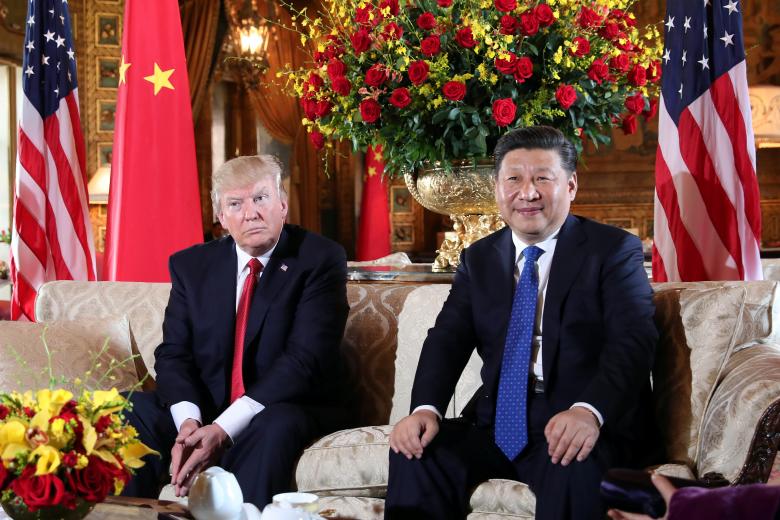
In a January 2017 survey by Pew Research Center of Americans, 65% said China is either an adversary (22%) or a serious problem (43%), while only about a third (31%) said China is not an issue. And in a separate spring 2016 survey, a majority (55%) of Americans held an unfavorable opinion of what more and more Americans see as their largest Asian rival.

In the United States, negative views of China have increased by 26 percentage points between 2006 and 2016. And American negativity toward China has been higher than Chinese negativity toward the US in every year since 2014.

Without a research-based, robust, and deliberate public affairs effort, how Americans perceive and comprehend China will only continue to slip into a more negative territory.

For far too long America's business and civic leadership has overly relied on a model dependent on high-level government relationships, support from the White House, and the commitment of multinational companies to manage the US-China relationship.

This model to manage the US-China relationship is broken and exhausted.

With ever increasing media coverage, more industries seeking protectionism tactics, and an American electorate increasingly looking to blame nations on their standing,  it is time for new voices, new allies, and engagement beyond the beltway.

Caracal Global has developed a team of unique talents to change the trajectory of the relationship. Utilizing polling, research, grassroots marketing, executive education, and communications, Caracal Global has the wherewithal to develop the right public affairs effort for US-China issues big or small.

Our services are flexible and scalable. From a macro quarterly solution taking an overarching view of the relationship to a bespoke monthly solution that is designed to fit the specific needs of your organization, Caracal Global can provide the tools you need to manage this significant relationship.

The team assembled has a demonstrated track record of success with political candidates, ballot measures, grassroots marketing, national public affairs, forensic research, business intelligence, and global communications.

China Communications + Polling (CCP) applies the right tools for the right situation and the desired outcome by leveraging proven tactics woven with years of expertise determining core drivers of human opinions and behavior.

Cincinnati, we have a problem.

On June 16, 2017, an audible gasp spread across the seven hills of Cincinnati, and once again it was the result of Hall of Fame leadership and execution from the technology powered West Coast.
 
Push notifications were buzzing across the smartphones owned by the executives at Macy’s, Kroger, and P&G with the news that Jeff Bezos and his team at Amazon was seeking to formally defeat the business model that has shaped the blue-chip captains of commerce in Cincinnati for over a century.
 
“Amazon is acquiring Whole Foods.”
 
Audible gasp.
 
The last time The Queen City heard such an audible gasp was on January 22, 1989, following Super Bowl XXIII when the mighty Bengals feel to the upstart 49ers. The defeat of the city’s professional football team on that Sunday felt eerily similar to last Friday’s huge news that Amazon would acquire Whole Foods.
 
To beat the city’s professional football team in the Super Bowl, it required a legendary performance by future Hall of Fame quarterback Joe Montana. On that day, Montana masterminded a drive that took his team down nearly the length of the field in 11 plays using a playbook of disruption and speed shaped by the brilliance of coach Bill Walsh. With only 39 seconds left on the game clock and all the pressure of success and failure hanging in the balance, Montana tossed a well-executed touchdown pass to a wide receiver to secure the victory.
 
Audible gasp.
 
Since that game, the Bengals have only recorded one postseason win and currently hold the NFL's longest active drought between postseason victories.
 
Not good.
 
Now once again the city is under threat from Hall of Fame leadership and execution from the technology powered West Coast.
 
Jeff Bezos has long sought to redefine, refocus, and recalibrate the consumer shopping experience. 
 
It isn’t so much that Bezos wants to sell more high-end kombucha or grass-fed beef, he wants Amazon to own more and more of consumer spending while at the same time providing endless options, lower prices, and frictionless delivery.
 
Amazon’s purchase of Whole Foods instantly puts the company in the neighborhood of America’s most affluent and tech savvy zip codes.  Better yet,  Amazon just bought 460 ultra-performance warehouses with proper cold storage and food preparation on scale.

Also, the acquisition foreshadows a future of shopping for food basics and commodity products as an activity of the past for the tech savvy and wealthy. No longer will customers be forced to buy products that are driven by advertising and designed to be accepted by the mass market. No longer will such goods only be accessible by a trip to a large store surrounded by hundreds of parking spots where items are placed into a cart, taken out of a cart, and then placed back into a cart.
 
The idea that I soon will be able to stop wasting any more of my limited time to buy commodity products like soap, trash bags, paper towels, and socks is fantastic. The shopping cycle of driving to a big box store, pushing a cart around numerous aisles, then waiting in line to checkout, and finally then placing my parcels in my vehicle to return home is numbered.
 
Amazon will now be even more permitted to deliver a frictionless shopping experience plus provide huge choice and competitive prices. Empowered by giant warehouses, world-class logistics, immense shopping and behavioral data, and access to seemingly an endless supply cheap capital, coupled with Whole Foods’ physical stores, Amazon is poised to reshape the $800 billion grocery market, unlike anything we have seen since the development of scalable cold storage technology.
 
Just like the Bengals extended drought in postseason football, the blue-chip captains of commerce in Cincinnati face an incredible challenge to avoid the same championship void.
 
Will the companies of The Queen City play offense or defense?
 
I feel the companies will be more defensive in nature with further mergers rippling across the grocery, retail, and consumer product goods space as Macy’s, Kroger, and P&G work feverishly to secure the consumers of the mushy middle while not seeking championships.

Marc A. Ross is the founder of Caracal Global, an adjunct professor at George Washington University teaching a course on Globalization and American politics, and former communications director for the US-China Business Council. Ross has extensive experience in business development for companies as well as leading the advocacy operations, fundraising programs and communications efforts for nonprofits, trade associations, corporations and political campaigns, many for the highest offices in the United States and the United Kingdom. You can find him on Twitter at @marcaross.